Patrick's Model
An objective, mail-out screen for the invisible wounds of service.
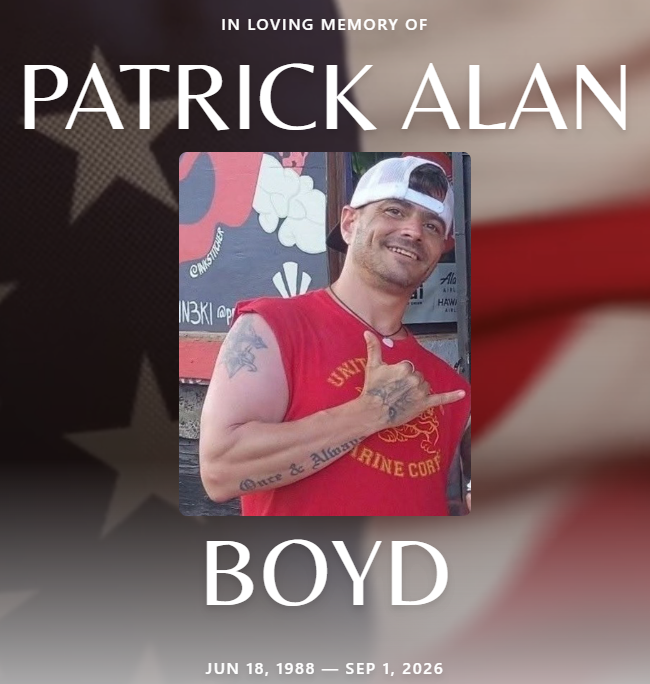
In memory of Patrick Boyd, USMC. Not all wounds are visible
Background: A Critical Healthcare Challenge
Special Operations Forces operators experience repeated blast exposure at rates above the general military population. A 2024 study in the Proceedings of the National Academy of Sciences examined 30 active-duty US SOF personnel with an average of 17 years of service and found that higher cumulative blast exposure was associated with alterations in brain structure, brain function, and neuroimmune markers, as well as lower quality of life [1]. No signs of injury were identified by conventional MRI; the findings required 7 Tesla functional MRI, connectome-grade diffusion MRI, and PET [1,2]. The damage is real, it accumulates, and standard clinical imaging does not catch it.
The larger problem is that most of the people carrying it never reach the imaging at all. Diffuse axonal injury is a signature wound of mild TBI, and standard CT cannot detect it [3]. Cognitive screens detect impairment only after symptoms appear. Self-report is unreliable because operators have strong career incentives to under-report. Our own team member, an Army EOD technician with more than 390 call-outs, was diagnosed with a TBI thirteen years after leaving service. He is not unusual. The largest veteran EEG study to date needed 340 participants, an average of eleven years post-injury, to see an effect its authors called subtle [4].
What the field needs, and has not had, is an objective measure that reaches the person where they are — at home, on their own schedule, against their own baseline — instead of asking them to come to a clinic that most will never visit.
Our Solution: A Twenty-Minute Kit That Ships in a Box
It contains a consumer eight-electrode EEG headset and runs on the person's own phone. The session takes twenty minutes and needs no clinician, no technician, and no appointment; the software checks signal quality live, guides adjustment, and asks for a redo when a segment fails. Data are time-stamped on one clock, encrypted on the device, and uploaded. The kit goes back in the box.
Three signals, each doing the job it is actually good at:
EEG is the backbone — four minutes of resting recording and a ten-minute auditory task, analysed by Patrick's Model, our quantum-inspired EEG pipeline. In September 2026 we validated it on the largest public TBI EEG dataset (95 people, 197 recordings, recorded on a 64-channel research cap [5]) under a protocol built so no result could be an artifact: people never appear in both training and test, splits are frozen and hashed, every result is checked against shuffled labels and a permutation null, and recording-batch confounds were tested for and removed. Restricted to the eight electrode positions of the consumer headset, a pre-specified panel of 21 EEG measures separated sub-acute TBI from healthy controls at AUC 0.86 (n = 70, permutation p = 0.025), with both groups recorded under the same protocol. The eight consumer electrodes reproduced the 61-channel cap's pattern of group differences at r = 0.87–0.92 across four comparisons and matched or exceeded its separation on every one. The signal is carried by the two markers the TBI-EEG literature has described for decades — elevated resting theta-band phase coupling and a slowed dominant alpha rhythm — in the direction and size reported by the 340-veteran LIMBIC-CENC study [4] and the chronic-mTBI connectivity literature [6]. We did not find something new and unexplained; we found what the field said should be there, on hardware that fits in a mailer.
Eye tasks run on the phone's front camera: fixation stability, pro- and anti-saccade latency and error rate, smooth-pursuit gain, convergence, and a pupil-light response. Oculomotor deficits are among the most consistently reported chronic findings in blast-exposed service members, and no add-on hardware is required.
Voice uses our own voice-banking platform to establish a personal acoustic baseline at enrollment — articulation rate, pause structure, pitch variability — and measures every later sample against that fingerprint rather than a population mean. As before, a banked voice also serves a second purpose: if a person is later injured in a way that affects speech, their own voice is already preserved and can be restored.
What stays in the clinic, and why. Blood biomarkers remain the right tool for what they do — the FDA-cleared i-STAT TBI test for acute post-event screening [7,8], and longitudinal panels of neurofilament light, GFAP, tau, and p-tau181 for validation studies [9,10] — but none is available as a home test, so they are a lab draw in the study design, not a part of the kit.
What We Have Not Shown, and Say Plainly
The 0.86 above is a group-level result: the panel was fit on everyone, and the number says the groups are separable, not what a single person would score. Under strict held-out evaluation, individual-level classification on that dataset was at chance across six model families — and the previously published 81% on the same data does not replicate under subject-level evaluation. On 51–95 people, that is what honest numbers look like. Per-person screening requires a larger cohort measured against each person's own baseline, which is exactly what the kit is designed to collect. The two indicators are pre-registered: their direction and a composite score are written down before the first kit ships, so a confirmation on new people, on new hardware, is unarguable.
Why This Matters
For SOCOM Command, and or the greater DoW: nothing to install, nothing to sustain, no clinic time. The unit of analysis is an operator's own trajectory — baseline, post-exposure, 24 hours, one week — against blast-overpressure gauges already worn on ranges. A single instrumented training cycle of 20–30 operators yields a per-person dose–response curve, a fundamentally more powerful design than any cross-sectional study. Data are U.S.-owned and governed under a written retention policy.
For Operators: twenty minutes, at home, on their own schedule, measured against themselves. The system catches decline in high performers who would still score above population norms after real cumulative injury, and it reaches the people who would never walk into a clinic. It is designed to be operator-protective first and command-visible second.
References
[1] Stone JR, et al. Impact of repeated blast exposure on active-duty United States Special Operations Forces. PNAS 121(18):e2313568121, 2024.
[2] Massachusetts General Hospital Center for Neurotechnology and Neurorecovery. Press release, April 22, 2024.
[3] Bryden DW, Tilghman JI, Hinds SR. Blast-Related Traumatic Brain Injury: Current Concepts and Research Considerations. Journal of Experimental Neuroscience 13, 2019.
[4] LIMBIC-CENC resting-state EEG study of mild TBI in 340 service members and veterans, ~11 years post-injury. [insert full citation — authors, journal, year]
[5] Cavanagh JF, et al. OpenNeuro dataset ds003522: EEG in mild TBI and controls, three-stimulus auditory oddball and rest. [insert full citation]
[6] Resting-state EEG functional connectivity as a biomarker of chronic mild TBI. Frontiers in Neurology, 2025. [insert authors]
[7] FDA. K234143 Substantial Equivalence Determination for i-STAT TBI Cartridge with the i-STAT Alinity System, 2024.
[8] Bazarian JJ, et al. Serum GFAP and UCH-L1 for prediction of absence of intracranial injuries on head CT (ALERT-TBI). Lancet Neurology 17(9), 2018.
[9] Boutté AM, et al. Elevated Axonal Protein Markers Following Repetitive Blast Exposure in Military Personnel. Frontiers in Neuroscience, 2021.
[10] Graham NSN, et al. Poor long-term outcomes and abnormal neurodegeneration biomarkers after military traumatic brain injury: the ADVANCE study. Journal of Neurology, Neurosurgery & Psychiatry, 2025.